














This publication is a part of a dissemination series for the project ‘Foreign Terrorist Fighters & families: interdisciplinary analysis of proactive response in Central Asia’.
As global attention drifts away from Syria and Iraq, thousands of people remain trapped in detention camps and prisons, while about sixty countries still face the question of what to do next. Apart from Iraq, which by September 2025 had already repatriated around 18,000 citizens and pledged to bring back the rest, the Central Asian states stand out as global leaders in repatriation. Since 2019, Kazakhstan, Kyrgyzstan, Uzbekistan, and Tajikistan have collectively returned about 2,100 of their citizens. Now, by the end of its sixth year, Central Asia’s experience with repatriation, rehabilitation, and reintegration offers valuable lessons for the world. Yet one of the least understood aspects of this story lies not in government decisions, but in how local communities receive those who returned.
Studying foreign terrorist fighters (FTFs) and their families remains a crucial area of research as global security dynamics continue to evolve. Conflict zones emerge or reemerge, and foreign fighters continue to reappear in new conflicts, necessitating that scholars adapt their approaches. While the territorial defeat of the Islamic State of Iraq and the Levant (ISIS, aka ISIL or Daesh, designated as a terrorist organization by Russia, the United States, and listed in the UN Security Council Consolidated List as QDe.115) reduced large-scale recruitment, it did not entirely stop mobilization, nor did it annihilate this terrorist organization. Moreover, significant challenges remained in detention camps and detention facilities in northeast Syria, which almost slipped off the international agenda.
According to Amnesty International, as of December 2023, the detainees there included approximately 11,500 men, 14,500 women, and 30,000 children held in at least 27 detention facilities and two detention camps called Al-Hol and Al-Roj. The more recent estimates indicate approximately 38,000 individuals in the camps and around 8,500 in prisons. These facilities are managed by the Autonomous Authorities of the North and East Syria, supported by the U.S. government. The situation around camps gets even more volatile as the power balance changes in Syria after the fall of the Assad regime. As the U.S. government once again called for international repatriations and threatened to withdraw funding from the camps and prisons, and in fact started doing so, the fate of detained populations returned to the political agenda, raising pressing questions about repatriation, prosecution, and rehabilitation.
In such circumstances, it is imperative to advocate for states to consider repatriations and dealing with fighters and their family members domestically. Best practices from countries that have already acquired precious experience can be beneficial in guiding such a discussion. Central Asian states can indeed offer rich insights. Yet those insights are still heavily understudied.
Between June 2024 and May 2025, I conducted 43 semi-structured interviews, both online and in-person, with frontline practitioners, state officials, international civil servants, and academics across Central Asia. These conversations revealed several areas where knowledge and policy remain limited. Findings indicate that addressing these data gaps could significantly enhance the understanding of how state policies toward FTFs and their families impact societies in the region and beyond. One of the most fascinating yet deeply understudied aspects of repatriation, rehabilitation, and reintegration is the relationship between returnees and their host communities.
Acceptance
Local communities play a crucial role in either facilitating or obstructing reintegration. In most cases, repatriates return to where they lived before their departure. However, we still know little about how welcoming these communities are. Acceptance is a key factor in ensuring successful reintegration. To what extent are communities willing to engage with returnees, provide social and economic opportunities, and rebuild trust? How does that vary in larger or smaller communities? Understanding these community dynamics could help improve future government programming and prevent marginalization.
Stigma
Stigma can be a serious barrier to successful rehabilitation and reintegration. Some returnees face deep-rooted stigma because local communities perceive them as security threats rather than individuals in need of support. Another question is to what extent distrust and fear still exist, which can fuel stigmatization. Communities may fear, and sometimes for good reason, that returnees may still harbor radical beliefs, making it difficult for them to rebuild relationships and integrate into society, or, worse, to spread those beliefs further. As we have no detailed data on this matter, only anecdotal evidence is available, so we cannot be certain of the extent of stigmatization. Collecting evidence-based insights about stigmatization would be crucial for Central Asian policymakers who continue to navigate the social tensions surrounding reintegration.
Support
While we are aware of the types of support offered to repatriates by each state, the scale and impact of such support vary significantly. Moreover, the nature of this assistance is often misunderstood. In some communities, especially those facing economic hardship, people question why the state supports ‘terrorists or children of terrorists.’ This perception risks deepening social divides. Rehabilitation and reintegration efforts can only succeed if broad-based social services and clear public communication accompany them. Some Central Asian states have adopted a pragmatic approach, integrating returnees into general social assistance programs while avoiding their stigmatization and providing support to all vulnerable groups.
Potential for engagement
Studying the potential for community engagement could provide the grounds for building sustainable programming. Hence, another great question is to what extent local communities can be active actors in rehabilitation and reintegration in the region. The communities have much to contribute to these processes. Respected religious or community leaders could shape acceptance narratives and counter radical ideologies. Local initiatives, such as mentorship programs, psychological support services, and community dialogues, can help bridge the gap between returnees and society. Strong family networks can also support and aid reintegration. Communities can also serve as a source of job opportunities and economic stability, thereby increasing social inclusion and reducing the risks of recidivism. Generally, engaging communities in rehabilitation and reintegration programming can help to counter radical beliefs, strengthen social cohesion, and build resilience. At the same time, communities could be the sources of grievances or radicalization that pushed returnees to conflict zones in the first place. The returnees may be reintroduced to the same adverse conditions upon their arrival. To what extent such positive or negative potentials have been evoked or mitigated in Central Asia requires a deeper consideration.
In conclusion
Central Asia’s experience shows that successful reintegration depends not only on government policy but also on community resilience. Investing in understanding and empowering local communities is not just a social policy; it is a vital component of sustainable development. In fact, it is a security strategy for the region’s future. The prevailing climate of secrecy and securitization makes it challenging to understand what happens within local communities. Yet, studying these relationships more closely would yield valuable, evidence-based insights. To move forward, the region needs interdisciplinary research teams, transparent dialogue, and long-term engagement. Understanding how returnees and communities interact will help strengthen social cohesion and build sustainable peace in Central Asia and beyond.
Author Dr. Elena Zhirukhina, Research and Education for Global Challenges, Faculty of Philosophy and Cultural Heritage, Ca’ Foscari University of Venice. Published with the author’s permission.
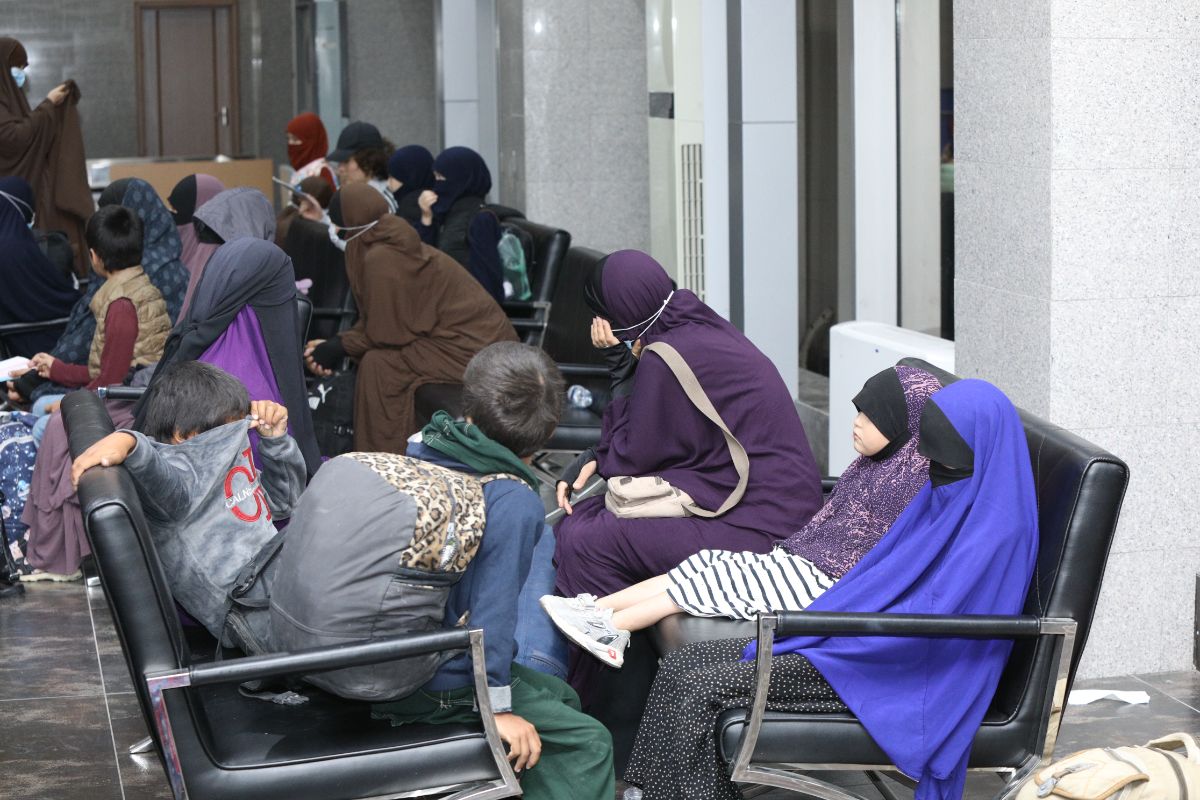
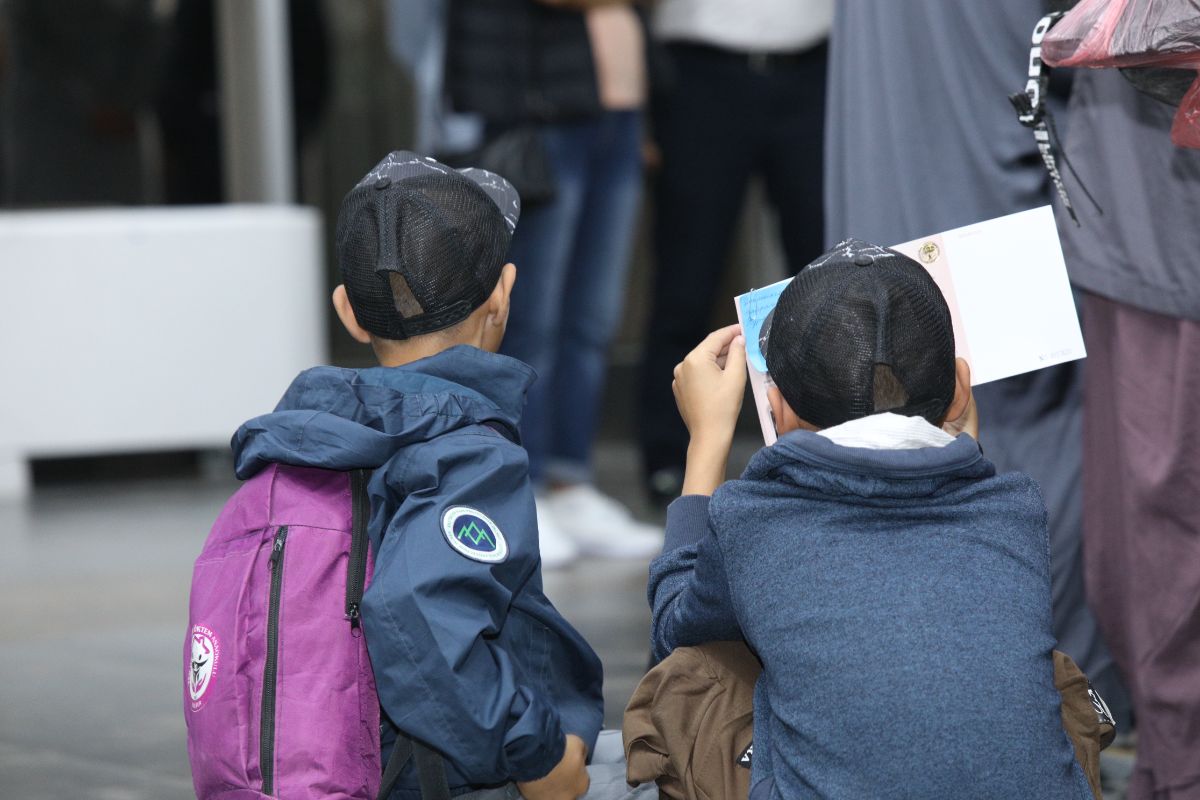
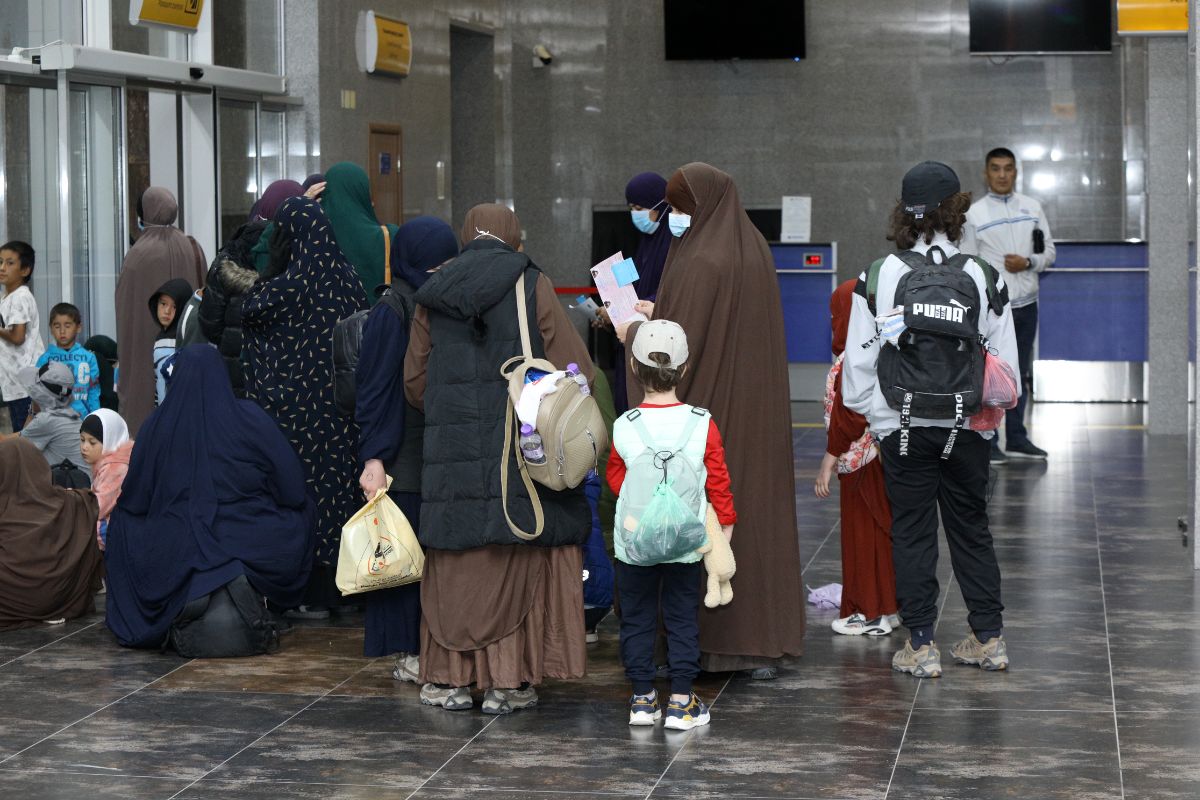
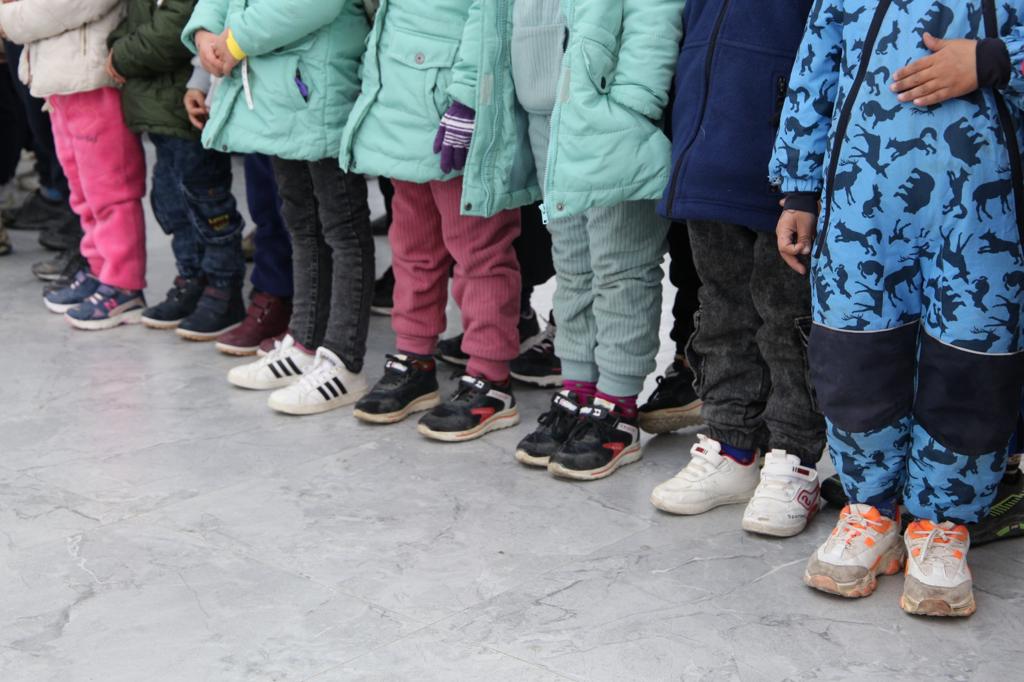
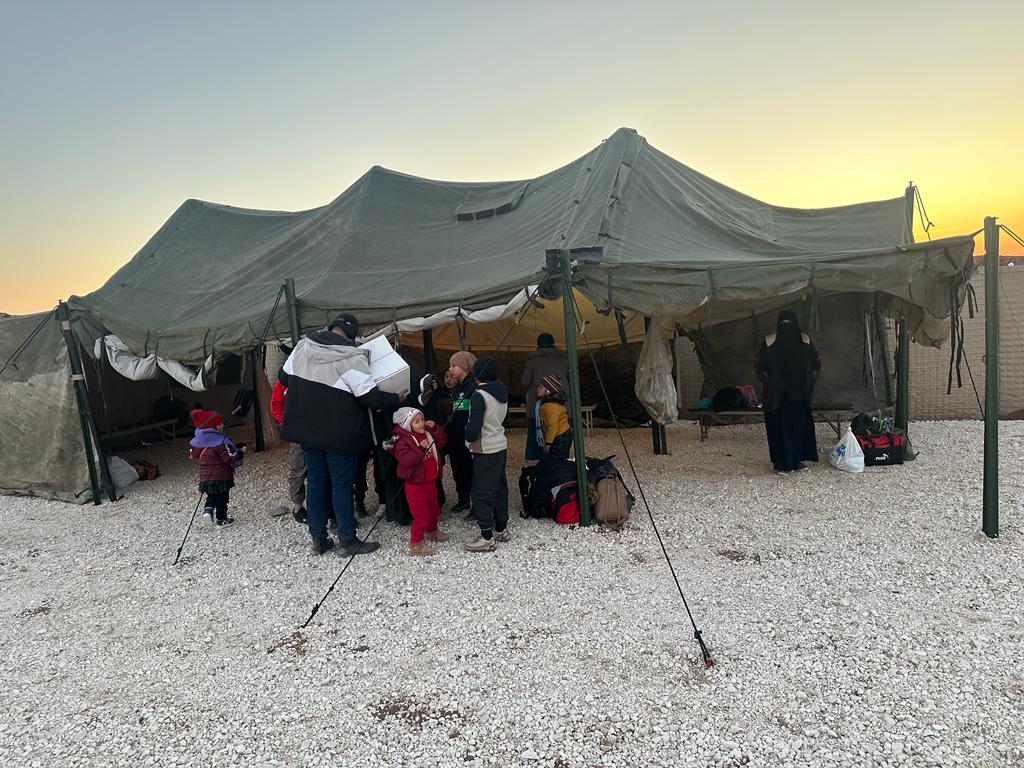
The cover shows the repatriation of children and women from Syria to Kyrgyzstan. Photo by the press service of the Ministry of Foreign Affairs of the Kyrgyz Republic.